FDS
Fire Dynamics Simulator (FDS) is a large-eddy simulation (LES) code for low-speed flows, with an emphasis on smoke and heat transport from fires. FDS Homepage
Available Modules
module load FDS/6.7.9-intel-2022aFDS (Fire Dynamics Simulator) was developed by the National Institute of Standards and Technology (NIST) for large-eddy simulation (LES) of low-speed flows, with an emphasis on smoke and heat transport from fires.
FDS can utilise both MPI and OpenMP
Example Script
#!/bin/bash -e

#SBATCH --job-name       FDS-job
#SBATCH --job-name       nesi99991
#SBATCH --time           02:00:00       # Walltime
#SBATCH --ntasks         4              # One task per mesh, NO MORE
#SBATCH --cpus-per-task  2              # More than 4 cpus/task not recommended.
#SBATCH --output         %x.out         # Name output file according to job name
#SBATCH --hint           nomultithread  # Hyperthreading decreases efficiency.

module load FDS/6.7.1-intel-2017a

input="/nesi/project/nesi99999/path/to/input.fds"

srun fds ${input}
Recommendations
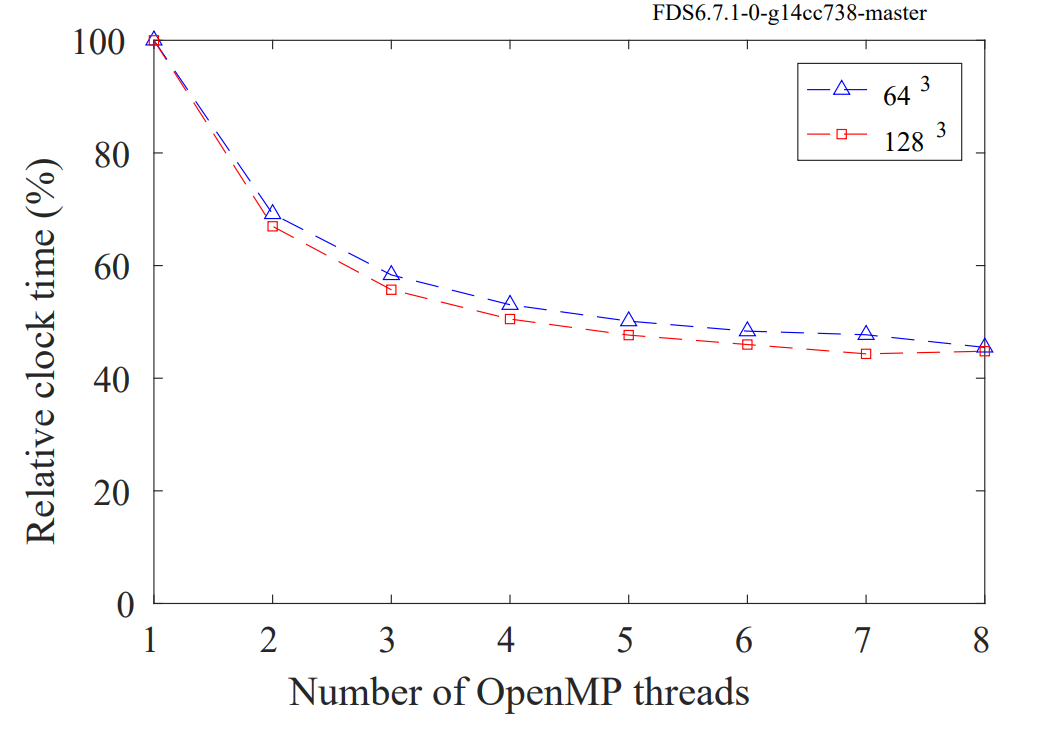
- FDS will run in Hybrid Parallel, but will be less efficient that full MPI using the same number of CPUs.
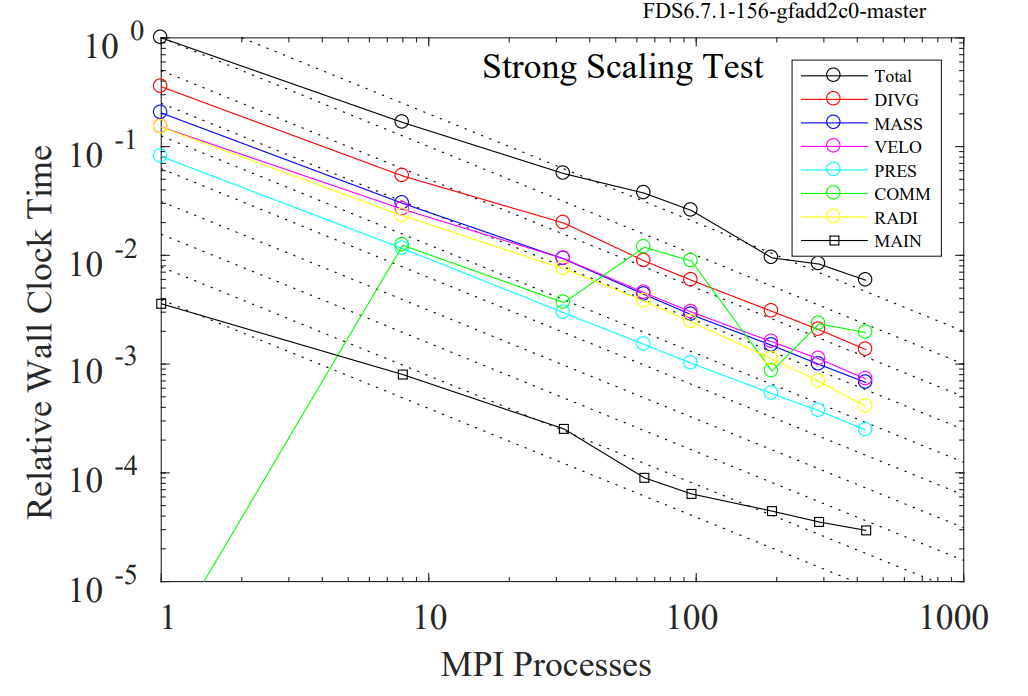
- MPI if the preferable method of scaling, if you can partition your
mesh more you should do that before considering multi-threading
(OpenMP). e.g.
ntasks=2, cpus-per-task=1is preferable tontasks=1, cpus-per-task=2 - Each mesh should have it's own task, assigning more tasks than there are meshes will cause an error.
- Multi-threading efficiency drops off significantly after 4 physical
cores.
--cpus-per-task 4 - Simultaneous multithreading is not recommended. Do not set
--hint multithread
Scaling with MPI
Scaling with oMP